Site qualification
Record coordinates, geometry, activity, mounting, wind, shading, electrical availability and access. Solar projects add irradiance source, operating profile, autonomy target and temperature range.
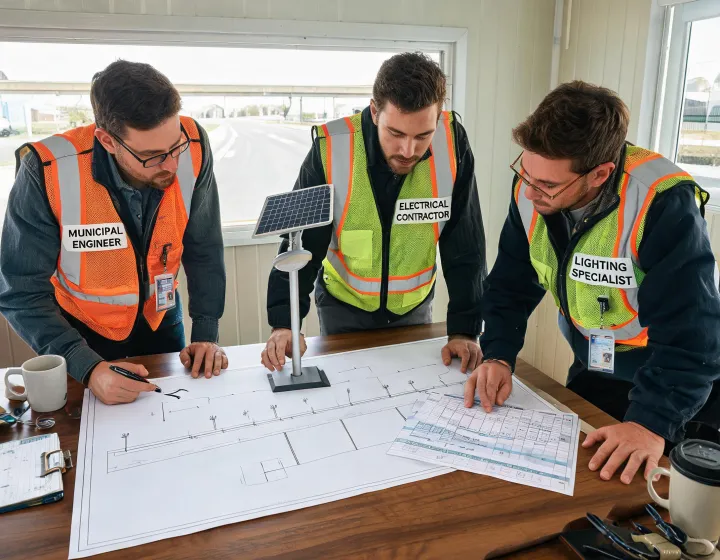
Project Support
A coordinated record keeps solar assumptions, photometry, hardware, delivery and service questions connected.
This support model does not replace engineering approval or commercial terms. It defines the evidence needed before a decision moves forward and preserves the assumptions that may need revision.
Record coordinates, geometry, activity, mounting, wind, shading, electrical availability and access. Solar projects add irradiance source, operating profile, autonomy target and temperature range.
Connect optics, pole arrangement, control behavior and current IES or LDT files. A sample can verify construction and interface behavior, but not annual solar performance or every field exposure.
Freeze configured luminaires, photovoltaic modules, batteries, controls, poles and accessories. Quantities, destination and delivery milestone are confirmed through the authorized quotation.
Archive product identity, programmed schedules, installation checks and acceptance records. A service request is faster to diagnose when the original load and site assumptions remain available.
Completion means a record exists; it does not mean risk disappears. Photometric performance changes with geometry and maintenance factors. Autonomy changes with solar resource, shading, temperature, aging and dimming. IP and IK do not establish wind, corrosion or foundation suitability.
A larger energy store can increase autonomy margin but also affects cost, mass and service planning. Aggressive dimming reduces energy demand while changing maintained light during low-traffic periods. Integrated enclosures simplify interfaces; serviceable components may improve field repair. Project stakeholders should approve the chosen balance.
No certificate number, lifetime result or annual autonomy is inferred when the supplied brand data does not provide it.
Share the current site pack and the next decision date.